FutureLakes at SERE2026: Supporting the Transition from Restoration Goals to Action
The 15th European Conference on Ecological Restoration (SERE2026) brought together researchers, practitioners, policymakers, and restoration professionals from across Europe to explore how ecological restoration can be accelerated in the face of growing environmental challenges.

As Europe moves towards implementing the EU Nature Restoration Regulation, discussions at the conference focused on a critical question: how can restoration ambitions be translated into effective and achievable actions on the ground?
Sharing FutureLakes Insight
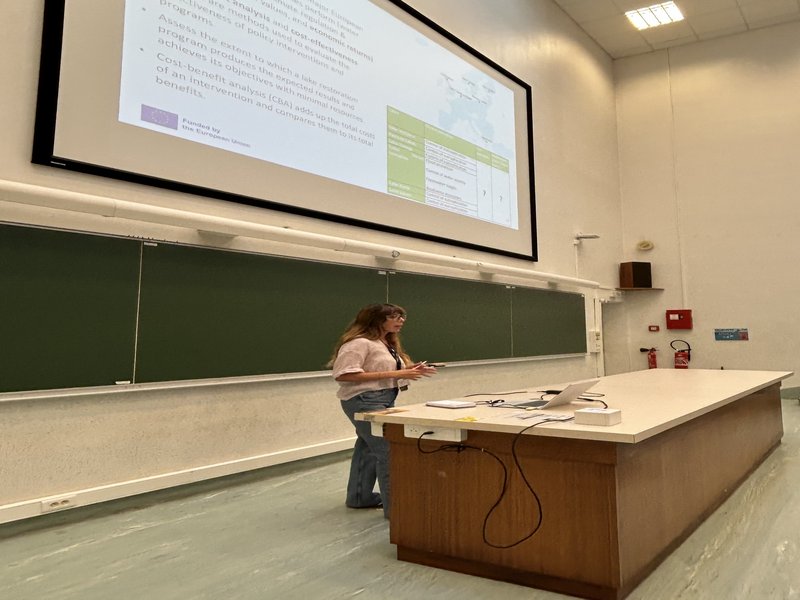
FutureLakes was represented by Najla Kamergi (SEMIDE), who shared insights from ongoing project activities related to the restoration of freshwater ecosystems.
The presentation highlighted work undertaken within FutureLakes on:
- Assessing the cost-effectiveness of lake restoration measures
- Evaluating policy coherence and its influence on restoration outcomes
- Lessons from case studies in Lake Vesijärvi, Finland, and Lake Karla, Greece
These activities contribute to a better understanding of how policy frameworks and restoration investments can support the long-term recovery of lake ecosystems.
From Policy to Practice
A recurring theme throughout SERE2026 was the importance of connecting ecological science with governance, financing, and stakeholder engagement.
While restoration targets provide essential direction, their successful implementation depends on:
- Coordinated action across sectors and governance levels
- Effective participation of local stakeholders
- Sustainable financing mechanisms
- Adaptation to changing environmental and climate conditions
The discussions highlighted that restoration is not solely an ecological challenge but also a social, economic, and governance challenge.
Strengthening Europe's Restoration Community
Beyond the scientific sessions, the conference provided a valuable opportunity to exchange experiences and learn from restoration initiatives across different ecosystems and regions.
For FutureLakes, these exchanges reinforce the importance of developing practical, evidence-based approaches that support the protection and restoration of freshwater ecosystems while contributing to broader biodiversity and climate goals.
As Europe advances its restoration agenda, collaboration between researchers, practitioners, policymakers, and local communities will be essential for delivering lasting environmental benefits.
We thank the organisers of SERE2026 and all participants for the inspiring discussions and look forward to continuing to contribute to the growing European restoration community.